You turn the key or press the start button, and instead of a familiar engine hum, you hear a series of weak clicks or nothing at all. It feels sudden, but a dead battery is rarely an overnight event. Most failures are the result of slow, invisible chemical and electrical changes that build up over weeks or months. Understanding what actually happens inside your battery, and what stresses it faces from the rest of your vehicle, can help you catch problems before you are stranded in a parking lot.
How Sulfation Quietly Kills Battery Cells
The trouble starts when a car sits unused for long stretches or is repeatedly undercharged by short trips that never let the alternator finish the job. Under those conditions, the soft crystals have time to harden and bond permanently to the plates. A battery left sitting for as little as two weeks in cool weather, or just a few days in extreme heat, can already begin forming these stubborn deposits. This is a common problem with seasonal vehicles like RVs and boats, which is why many local RV services offer battery maintenance checks for owners who only drive their vehicles a few times a year.
This is why a battery can seem perfectly fine one week and completely dead the next. Sulfation begins as tiny lead sulfate crystals form on the battery plates whenever the battery sits at less than a full charge for an extended period. At first these crystals are soft and easily reversed by a full charging cycle, but left unchecked for weeks or months, they harden into a coating that blocks the chemical reaction the battery needs to hold and deliver power.
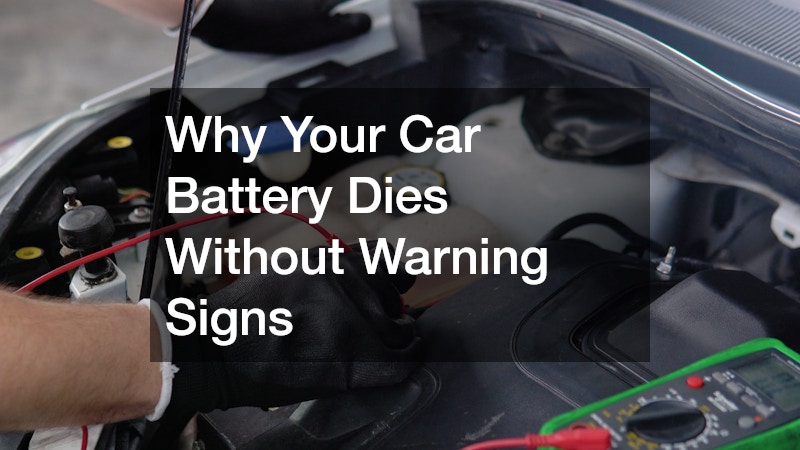
The degradation is gradual and mostly invisible unless you are testing voltage regularly. A healthy battery typically reads around 12.6 volts at rest, but a sulfated one can drop to 12.0 volts or lower while still starting the car reliably for a while. That gap between “still works” and “actually healthy” is exactly where drivers get caught off guard, since the car shows no symptoms until the crystal buildup finally chokes off enough surface area to stop the reaction entirely.
Many people who work in electrical engineering will tell you that sulfation is one of the most common preventable causes of early battery failure, and it rarely produces a dashboard warning until the damage is already extensive. Short trips under 20 minutes, long periods of vehicle storage, and consistently low charging voltage from a failing alternator all accelerate the process. A simple multimeter check every few months, or a maintenance charger during long idle periods, is often enough to catch the problem before the plates are damaged beyond recovery.
Why Modern Electrical Systems Drain Batteries Faster
Today’s vehicles carry far more onboard electronics than cars did even a decade ago, including infotainment systems, sensors, cameras, GPS modules, and a dozen or more computer modules that draw power even when the engine is off. A typical modern vehicle can have 30 to 100 microprocessors managing everything from climate control to lane-keeping assist, and many stay partially active around the clock.
Rather than fully shutting down, some of these systems stay in a low-power sleep mode so they can respond instantly when you unlock the door or start the car. This means a small but constant drain, typically in the range of 20 to 50 milliamps, is always present. It sounds negligible, but it adds up over days or weeks of sitting unused.
Certain features are more likely to keep pulling current long after you’ve walked away. Remote start systems, satellite radio modules, tire pressure monitoring sensors, and always-listening voice assistants all check in periodically to stay synced, and each check-in costs a small burst of power. Even factory-installed security systems that monitor for break-ins are, by design, never fully asleep.
Over time, this parasitic draw can pull down a battery that would otherwise have lasted several more years. A healthy battery might tolerate this drain for a couple of weeks before voltage drops significantly, but if the car sits longer than that, or if an aftermarket alarm, dash cam, or phone charger is also pulling current, the timeline shrinks fast. Aftermarket add-ons are particularly risky because they’re often wired directly to the battery rather than through a circuit the car’s computer can manage or shut off.
Age compounds the problem in ways that are easy to overlook. A battery that’s three or four years old has less reserve capacity to begin with, so the same 30-milliamp draw that a new battery shrugs off for a month might flatten an aging one in under two weeks. Cold weather makes this worse still, since low temperatures reduce a battery’s effective capacity right when parasitic loads are doing their steady, invisible work.
This is why a battery that seemed perfectly fine can be found dead after a long weekend away or a stretch of remote work with the car parked in the driveway. The failure isn’t sudden at all; it’s the predictable result of continuous small drains that never get the chance to recharge.
Modern vehicles pack dozens of electronic modules, from infotainment systems to keyless entry sensors, GPS trackers, and tire pressure monitors, and each one is designed to power down after the car is off. A single faulty module, a stuck relay, or a control unit that fails to enter sleep mode can quietly pull power all night long. What might normally be a negligible parasitic draw of 20-50 milliamps can spike to several hundred milliamps or more when something malfunctions, and that difference is enough to leave you stranded by morning.
Some of the most common culprits are surprisingly mundane. A glove box or trunk light that stays on after the lid closes, a faulty door switch that thinks a door is ajar, an aftermarket stereo or alarm system wired directly to the battery instead of a switched circuit, and even a phone charger left plugged into a powered outlet can all quietly drain a battery over several hours. Add in modules that stay partially awake to monitor remote start functions or over-the-air software updates, and it becomes clear why newer cars are more vulnerable to this problem than older ones with simpler wiring.
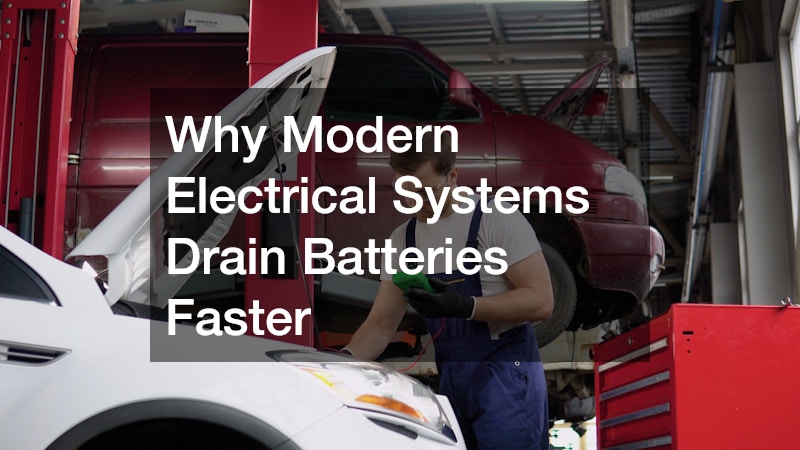
If you notice your battery struggling more than usual, it is worth having the electrical system checked with a multimeter or load test rather than assuming the battery itself is simply old. Technicians typically test parasitic draw by connecting an ammeter in series with the negative battery terminal after the car has fully powered down, then pulling fuses one at a time to isolate which circuit is drawing current. This kind of methodical testing can pinpoint whether the issue is a trunk light that never shuts off, a stuck relay, or an aftermarket alarm system wired incorrectly. Catching this early can save you from replacing a perfectly good battery only to have the same problem recur weeks later.
This is a common reason people search for car batteries as a first fix when the real issue is elsewhere in the wiring. It is an understandable assumption, since a dead battery is the most visible symptom, but treating the symptom without diagnosing the cause rarely solves the problem for long. A new battery might mask the issue for a few weeks, but if the parasitic draw is still there, you will likely find yourself back in the same situation before long.
The Hidden Impact of Extreme Temperature Swings
Heat is actually more damaging to a car battery than cold, even though cold weather is when most batteries seem to fail. High temperatures speed up the chemical reactions inside the battery, causing fluid to evaporate and internal components to corrode faster than normal. That damage often stays hidden through the summer months, only revealing itself when the first cold snap arrives and the weakened battery can no longer generate enough current to start the engine.
- Extreme heat accelerates internal corrosion and fluid loss
- Cold weather increases the power needed to start the engine
- Repeated temperature swings stress internal components over time
- Parking in direct sun for long periods adds extra thermal stress
- A battery that struggled through summer heat often fails in the first cold week
Corroded Terminals and Loose Connections
A surprising number of sudden battery failures are not actually about the battery at all, but about the connection points where it meets the rest of the car. Corrosion builds up gradually on the terminals, creating a layer of resistance that interferes with the flow of electricity even when the battery itself is in good condition. Loose cable clamps can cause intermittent connections that seem fine one moment and completely dead the next, which explains why some cars start inconsistently before failing outright.
Cleaning terminals and checking clamp tightness takes only a few minutes but can prevent a frustrating no-start situation. If corrosion keeps returning quickly, it may point to a battery that is overcharging slightly or venting more gas than normal, which is worth having inspected. This kind of preventive check is far cheaper than a tow truck call on a cold morning.

Alternator Problems That Masquerade as Battery Failure
The alternator is responsible for recharging the battery while the engine runs, and when it starts to fail, the symptoms often look exactly like a dying battery. Drivers frequently replace a perfectly good battery only to have the same no-start problem return within days because the real culprit was an alternator that could not keep up with the electrical demand. A failing alternator may cause dimming headlights, a battery warning light, or a battery that seems to drain overnight even when everything is switched off.
Diagnosing this properly requires checking the charging voltage while the engine is running, not just testing the battery on its own. Vehicles that also rely on complex onboard computer systems, similar to those found in diesel engine repair scenarios, can be especially tricky because multiple systems draw power simultaneously and mask the true source of the problem. Getting a proper diagnostic test avoids the frustrating cycle of replacing parts that were never actually broken.
Battery Age and the Myth of a Fixed Lifespan
Most starting batteries are rated to last between three and five years, but that number is a general guideline rather than a guarantee. Driving habits, climate, and how often short trips are taken all affect how quickly the unit ages internally. One used mostly for short commutes never gets a full charging cycle, which shortens its usable life significantly compared to one that regularly gets longer highway drives.
- Frequent short trips prevent full recharging and shorten usable life
- Extreme climates, hot or cold, accelerate internal aging
- Units left unused for weeks lose charge and develop sulfation
- Vibration from rough roads can loosen internal components over time
- Regular testing after year three helps catch decline before failure
Parasitic Drains from Aftermarket Accessories
Aftermarket additions like sound systems, dash cams, remote starters, e bike charging ports, and other accessories are common culprits behind batteries that mysteriously die overnight. If these components are not wired correctly, they can continue drawing small amounts of power even after the car is off, slowly draining the battery over several days. This kind of drain is especially sneaky because the car starts normally most mornings, then suddenly fails after a weekend of sitting parked.
Anyone who has installed aftermarket electronics themselves should have the wiring checked by someone experienced in electric repair to confirm everything is properly grounded and switched. A poorly installed accessory can also create small electrical faults that are difficult to trace without proper equipment. Catching this early prevents repeated battery replacements that never actually solve the underlying issue.
How Vehicle Type Changes Battery Demands
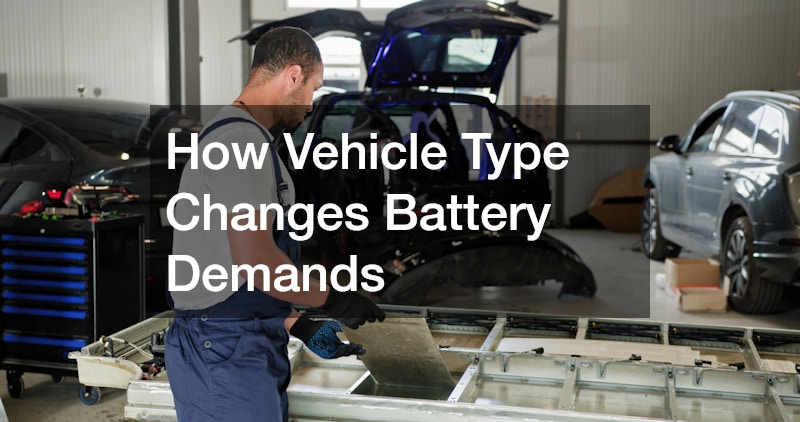
Not all vehicles put the same kind of strain on their batteries, and understanding your specific vehicle type helps explain why failures can feel unpredictable. Heavier vehicles and specialty equipment often require larger batteries or multiple battery banks to handle bigger electrical loads. Owners who maintain larger fleets, including those needing truck body repair after wear and tear from heavy use, often notice that electrical issues become more frequent as the vehicle ages and its wiring harnesses take on additional stress.
Warehouse and industrial equipment face similar challenges, and businesses that rely on regular forklift repairs know that battery health is just as critical to uptime as hydraulic or mechanical performance. Vehicles that sit idle for long stretches between shifts, such as seasonal work trucks or backup fleet vehicles, are especially prone to slow parasitic drains that go unnoticed until a jump start is needed. Even passenger cars used mainly for short commutes can develop chronic undercharging issues, since brief trips rarely give the alternator enough time to fully replenish the battery after startup demands.
What To Do Immediately After an Unexpected Breakdown
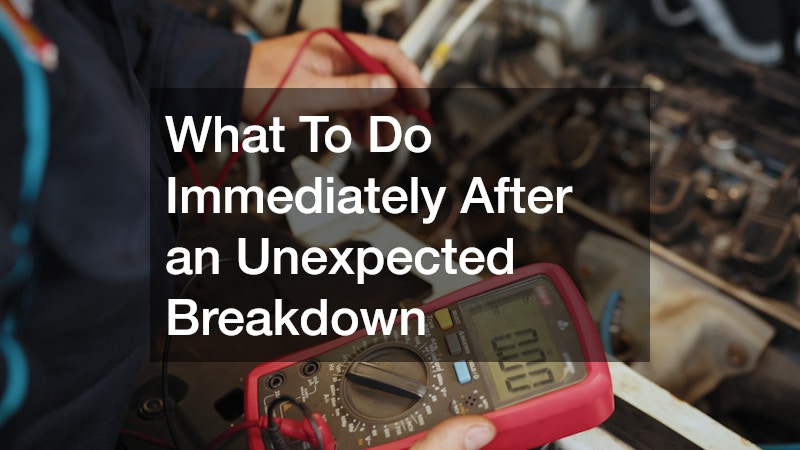
If your battery dies unexpectedly, the first step is to check for obvious warning signs like corrosion, a swollen battery case, or a burning smell, all of which indicate a problem serious enough to need professional attention rather than a simple jump start. Once the car is running again, avoid shutting it off right away and instead drive for at least fifteen to twenty minutes to let the alternator recharge the battery somewhat. It is also worth noting the exact circumstances of the failure, since details like recent short trips, extreme weather, or new accessories can help a mechanic diagnose the true cause faster.
In rare cases, a breakdown happens in unsafe conditions or leads to an accident, and knowing your options matters just as much as knowing your car. If a mechanical failure contributes to a collision, especially one involving a commercial vehicle, consulting an accident lawyer or a car accident lawyer can help clarify liability and protect you from unfair costs. While this is uncommon, it is a reminder that vehicle maintenance is not just about convenience but also about safety on the road.
A dead car battery is rarely a surprise to your vehicle—it’s usually the result of a slow, hidden issue you couldn’t see coming. By staying on top of battery age, terminal connections, and minor electrical glitches, you can catch small problems before they turn into expensive headaches or dangerous breakdown situations. Make routine battery testing a part of your annual vehicle maintenance, especially before extreme weather sets in. Just as you keep the contact info for a reliable car accident lawyer on hand for unexpected road emergencies, taking a few minutes to check your battery today protects you from being stranded on the side of the road tomorrow.